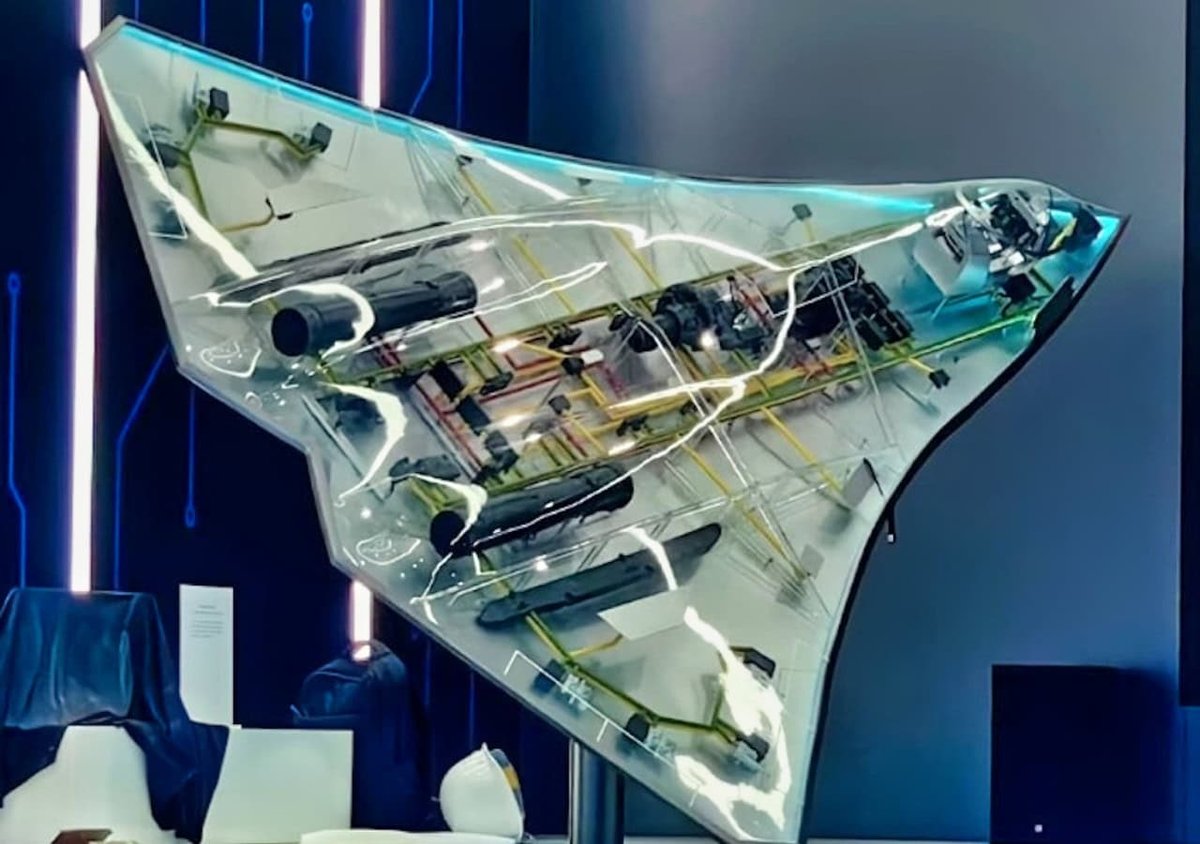
China's 6th Gen Fighters See Accelerated Development And Advanced Projections
The race for air dominance in the 21st century is accelerating, and China is pushing the envelope. Whispers and satellite imagery point to a burgeoning program aimed at developing formidable 6th-generation fighters, a clear statement of intent regarding the Development Status & Future Projections for China's 6th Gen Fighters. These ambitious projects, spearheaded by the rumored J-36 and J-50, are designed not just to match, but to potentially surpass, the capabilities of current fifth-generation aircraft and challenge the West's upcoming Next-Generation Air Dominance (NGAD) initiatives.
At a Glance: China's Next-Gen Air Power Push
- Flagship Project: The Chengdu J-36 is believed to be China's primary 6th-gen contender, aiming to rival US NGAD and European Tempest/FCAS programs.
- Target Operational Date: US intelligence projects operational capability by the mid-2030s for both J-36 and J-50.
- Key Design Philosophy: Emphasis on advanced stealth, unconventional propulsion (trijet rumored), hypersonic weapon integration, and extensive AI.
- Dual Approach: Alongside the J-36 (superiority fighter), the J-50 is being developed as a dedicated carrier-based 6th-gen platform.
- Strategic Ambition: To bolster China's power projection in the Indo-Pacific and contest traditional US air superiority.
- Major Hurdles: Engine technology, AI integration, evolving anti-stealth defenses, and complex supply chain dependencies remain significant challenges.
Decoding China's Silent Challenger: The Chengdu J-36
Developed by the Chengdu Aircraft Industry Group (CAIG), the same minds behind the formidable J-20 Mighty Dragon, the J-36 is shrouded in official secrecy. Yet, intelligence reports and strategic analyses paint a picture of a highly advanced aircraft poised to redefine air combat. Its mission is clear: to deliver superior air dominance, potentially serving as a carrier-based asset or a dedicated air superiority platform, fundamentally reshaping the balance of power in critical regions like the Indo-Pacific.
The United States Department of War, in a December 2025 report, underscored the accelerated pace of China's 6th-generation fighter programs, specifically naming the J-36 and J-50. This rapid progression suggests Beijing is committed to fielding these advanced capabilities by the mid-2030s, a timeline that puts it squarely in contention with Western programs.
Engineered for Tomorrow: Expected Features of the J-36
Understanding the J-36 means peering into the future of aerial warfare. Its rumored specifications speak to a design philosophy focused on unmatched stealth, devastating firepower, and intelligent autonomy.
Unrivaled Stealth: Vanishing from Enemy Sight
The J-36 is expected to push stealth technology far beyond current fifth-generation capabilities. Imagine an aircraft designed to be virtually invisible to most conventional radar systems, allowing it to penetrate contested airspace with impunity.
- Tailless Diamond-Delta Wing Design: This distinctive configuration, reminiscent of concepts seen in the US NGAD and European Tempest programs, is crucial. It significantly reduces the radar cross-section (RCS), making the aircraft incredibly difficult to detect. Beyond stealth, it offers enhanced aerodynamic efficiency, allowing for greater internal fuel storage – a critical factor for extended missions without external fuel tanks that compromise stealth.
- Advanced Radar-Absorbent Materials (RAM): Expect cutting-edge composite materials and coatings designed to absorb and diffuse radar waves rather than reflect them.
- Integrated Electronic Warfare (EW) Systems: These systems won't just jam enemy radar; they'll likely employ sophisticated techniques to actively confuse and deceive adversaries, creating false targets or masking the J-36's true position.
- Reduced Infrared Signature: Minimizing heat emissions from the engines is vital for evading infrared search and track (IRST) systems. Advanced cooling and exhaust nozzle designs are anticipated.
- Potential Plasma Stealth: While still largely experimental, the integration of plasma stealth technology – which uses ionized gas to absorb electromagnetic waves – could be a game-changer, further reducing the aircraft's detectability across various radar bands.
The Power of Three: Trijet Propulsion System
One of the most intriguing rumors surrounding the J-36 is its speculated trijet (three-engine) propulsion system. This would be a highly unusual configuration for a modern fighter, but one with distinct advantages:
- Superior Thrust-to-Weight Ratio: More engines mean more raw power, allowing for incredible acceleration, climb rates, and agility – crucial for air superiority engagements.
- Enhanced Supercruise Capability: The ability to sustain supersonic flight without using fuel-guzzling afterburners is a hallmark of advanced fighter design. A trijet system could provide the necessary power and efficiency for prolonged supercruise, enabling rapid deployment and evasion.
- Increased Redundancy: In combat, engine failure is a critical risk. A trijet design offers greater redundancy, improving survivability if one engine is damaged.
- Power for Directed Energy Weapons: Three engines could generate significantly more electrical power, potentially supporting experimental directed energy weapons (like laser cannons) that require immense energy. The engines would likely be advanced versions of China's indigenous WS-15 or WS-10C, though domestic engine development remains a significant hurdle.
Beyond the Horizon: Next-Generation Weaponry
The J-36 won't just be stealthy; it will be packed with formidable offensive capabilities, all carefully integrated internally to maintain its low-observable profile.
- Hypersonic Missiles: The integration of rumored hypersonic missiles like the PL-21, capable of speeds exceeding Mach 5, would represent a massive leap in offensive power, making interception incredibly difficult.
- Advanced Beyond-Visual-Range (BVR) Missiles: Expect improved variants of missiles like the PL-15, boasting extended range, enhanced guidance, and greater resistance to countermeasures.
- Short-Range Air-to-Air Missiles: For close-in engagements, the J-36 would carry highly maneuverable short-range missiles like the PL-10.
- Precision Air-to-Ground Munitions: Capability for precision strikes with weapons like the KD-88 and LS-6 guided bombs would provide multi-role flexibility.
- Electronic Warfare Pods: Internal EW systems would be complemented by advanced EW pods, further enhancing its electronic combat capabilities.
- Experimental Directed Energy Weapons: The potential for onboard energy weapons could offer new ways to engage targets or counter incoming threats.
Intelligent Warfighting: AI and Networked Dominance
The J-36 is envisioned as more than just a piloted aircraft; it's a node in a vast, interconnected combat network, with AI at its core.
- AI for Automated Targeting: AI will likely assist pilots with real-time threat assessment, target prioritization, and even autonomous targeting in complex scenarios, reducing pilot workload and increasing decision speed.
- Loyal Wingman Control: A key aspect of 6th-gen warfare is the ability to command multiple uncrewed combat aerial vehicles (UCAVs) from the cockpit. The J-36's AI would serve as the brain for these "loyal wingmen," controlling their movements, sensor inputs, and even weapons release.
- Autonomous Threat Identification and Avoidance: The AI would autonomously identify and prioritize threats, recommending or even executing evasive maneuvers and countermeasure deployment in milliseconds, far faster than human reaction times.
- Seamless Sensor Fusion & Data Connectivity: Advanced network-centric warfare capabilities are paramount. The J-36 would fuse data from its own sensors with inputs from drones, satellites, ground forces, and naval assets, creating a real-time, comprehensive situational picture. This unparalleled battlespace awareness would enable synchronized, multi-domain operations. For a glimpse into the cutting edge of these developments, you can check out Chinese 6th gen fighter photos that have been circulating.
Beyond the J-36: China's Dual-Track 6th Gen Approach
While the J-36 garners significant attention, it's not the only 6th-generation project in China's pipeline. Beijing appears to be pursuing a two-pronged strategy to ensure comprehensive air dominance.
Alongside the J-36, the J-50 is under development, specifically optimized for aircraft carrier operations. Given China's rapidly expanding naval power and its ambition to project force globally, a carrier-capable 6th-gen fighter is a strategic imperative.
The J-50 is expected to feature a twin-engine configuration, providing the robust power required for catapult launches and arrested landings. It will likely incorporate reinforced structural features to withstand the stresses of carrier operations and potentially folding wings to accommodate the limited space on carriers like the Type 003 Fujian. This dual development ensures that China's future air superiority extends from land-based airfields to the open seas.
The Hurdles Ahead: Navigating the Complexities of 6th Gen Development
Despite the ambitious projections and accelerated development, China faces significant technological and logistical challenges in bringing its 6th-generation fighters to fruition.
The Engine Conundrum: A Persistent Technological Gap
One of China's most persistent challenges in advanced aerospace development has been its indigenous jet engine technology.
- Performance Parity: China still struggles to develop high-performance jet engines that can truly rival Western counterparts like the Pratt & Whitney F119 (F-22) or General Electric XA100 (upcoming NGAD). Achieving consistent supercruise, high thrust-to-weight ratios, and exceptional fuel efficiency remains a difficult balancing act.
- Reliability and Production: While engines like the WS-15 and WS-19 (for future variants) are progressing, issues around long-term reliability and mass production scale continue to impact operational readiness and cost-effectiveness. This gap can affect both the J-36's agility and range.
AI in Combat: Bridging the Autonomous Warfare Divide
While China has made immense strides in AI, particularly in surveillance and data analysis, its integration into highly autonomous, real-time combat scenarios still trails.
- Full Sensor Fusion: Achieving truly seamless and reliable sensor fusion from disparate sources in a complex combat environment, where data streams are massive and rapidly changing, is incredibly difficult.
- Autonomous Threat Response: Developing AI capable of making split-second, life-or-death decisions in combat, including identifying novel threats and executing optimal counter-responses without human intervention, is a frontier where Western nations still hold an edge. The ethical and practical implications are also vast.
The Evolving Chessboard: Anti-Stealth Technologies
No stealth is absolute, and as China develops its stealth aircraft, rival nations are simultaneously developing countermeasures.
- Low-Band Radar: While effective against high-frequency radar, stealth aircraft are often more susceptible to detection by lower-frequency radar bands, which can detect the airframe's general shape.
- Infrared Search and Track (IRST): Passive IRST systems detect heat signatures, offering a stealth-agnostic detection method. Advances in IRST could make even low-observable aircraft vulnerable at closer ranges.
- Potential Quantum Radar: Though still highly experimental, the development of quantum radar by rival nations could theoretically offer unprecedented detection capabilities against even the most advanced stealth designs, rendering current stealth concepts obsolete.
The Industrial Machine: Logistics, Costs, and Supply Chains
Developing a 6th-generation fighter is an astronomical undertaking, requiring vast resources and a robust industrial base.
- Exorbitant Costs: The research, development, testing, and production costs for such advanced aircraft are immense, potentially straining even China's substantial defense budget.
- Supply Chain Dependence: Despite efforts towards self-sufficiency, China remains dependent on critical foreign components, particularly advanced avionics and semiconductors, often sourced from countries like Taiwan and South Korea. Geopolitical tensions could disrupt these vital supply chains.
- Mass Production Bottlenecks: Scaling up from prototypes to mass production of highly complex systems without compromising quality or timeline is a monumental industrial challenge.
Global Competition: The Race Against Time
The international landscape is not static. If the 6th-generation programs of the United States, Europe (Tempest/FCAS), and their allies achieve operational capability earlier, China risks facing a technological disadvantage in future air combat scenarios. This global race creates immense pressure to innovate rapidly.
Strategic Implications and Budgetary Realities
China's defense budget, projected at a formidable $230 billion in 2024, reflects its commitment to modernizing its military and achieving its strategic objectives. Should the J-36 and J-50 programs succeed, these aircraft will operate alongside the existing J-20 Mighty Dragon and the upcoming J-35 carrier-based fighter. This potent combination would fundamentally transform the People's Liberation Army Air Force (PLAAF) and Naval Air Force (PLANAF) into a highly capable, stealth-centric fighting force.
The operational deployment of China's 6th-generation fighters would significantly strengthen its power projection capabilities, particularly within the Indo-Pacific region. It would challenge the traditional air superiority enjoyed by the United States and its allies, potentially altering strategic calculations across a range of potential conflict scenarios, from Taiwan to the South China Sea.
What Lies Ahead for China's Air Dominance Aspirations
The Development Status & Future Projections for China's 6th Gen Fighters reveal a nation pouring immense resources and scientific talent into redefining aerial warfare. While challenges abound, the sheer scale of the effort and the rapid pace of advancement suggest that the J-36 and J-50 are not merely speculative projects but tangible ambitions that will shape the geopolitical landscape for decades to come.
As these programs continue to evolve behind a veil of secrecy, the global defense community will be watching closely. Their success or struggle will not only impact China's military capabilities but also influence the trajectory of air power development worldwide, setting new benchmarks for stealth, speed, intelligence, and networked combat. The future of air dominance is being forged now, and China is determined to be at its forefront.