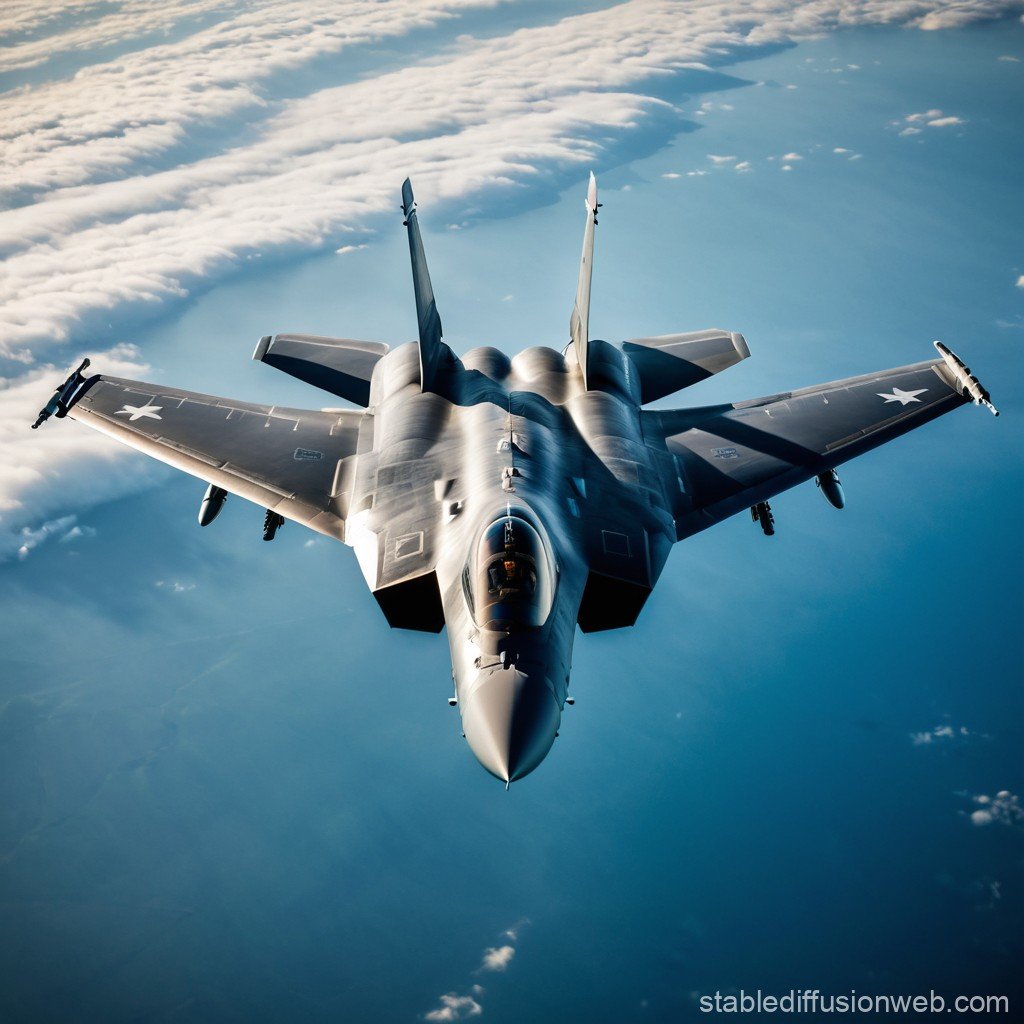
The roar of a jet engine slicing through the sky has long been a symbol of air superiority. For decades, each new generation of fighter aircraft has pushed the boundaries of speed, stealth, and lethality. Today, as 5th generation fighters like the F-22 Raptor and F-35 Lightning II dominate the headlines, the world’s leading aerospace powers are already locked in a high-stakes race to define and build the next leap: the 6th generation fighter jet. But what exactly are we talking about when we discuss Defining 6th Generation Fighter Jet Capabilities? It’s far more than just another speed boost or a new stealth coating; it's a complete reimagining of air combat, driven by unprecedented connectivity, artificial intelligence, and a battlefield awareness that borders on prescient.
Imagine an aircraft that doesn't just fly and fight, but acts as a dynamic node in a vast, interconnected network—a commander, a data hub, a cyber weapon, and a stealthy predator, all rolled into one. This isn't science fiction; it's the operational philosophy behind the 6th generation. These future warbirds are poised to transform how nations project power, protect their interests, and win in the complex, data-saturated battlegrounds of the 21st century.
At a Glance: What Makes a 6th Gen Fighter Different?
- Beyond Human Limits: Extensive use of Artificial Intelligence (AI) for decision-making, pilot assistance, and autonomous operations.
- Networking Nirvana: Acts as a central command node, integrating data from drones, satellites, and ground sensors across the battlespace.
- Hyper-Connected Warfare: Advanced digital capabilities for cyber warfare, data fusion, and real-time battlefield communication.
- Unrivaled Situational Awareness: Virtual cockpits, helmet-mounted displays, and AI processing provide 360-degree vision and predictive analysis.
- Optional Pilots: Designed for manned, remote-controlled, or fully AI-piloted missions, offering unprecedented mission flexibility.
- Extended Reach & Loiter: Variable-cycle engines provide efficiency for long-range cruising and bursts of high thrust for combat or even suborbital flight.
- Advanced Stealth: Next-level signature reduction, far surpassing current 5th generation designs.
- New Weaponry: Emphasis on beyond-visual-range (BVR) missiles and potential integration of directed-energy weapons like lasers.
- Digital Engineering Backbone: Designed and iterated using advanced model-based digital tools from conception.
- Resilient Navigation: Capable of operating and navigating without relying on GPS, crucial for contested environments.
The Paradigm Shift: Why 5th Gen Isn't Enough Anymore
Today's 5th generation fighters, like the F-22 and F-35, are undeniably formidable. Their combination of stealth, advanced sensors, and integrated avionics represents a significant leap over previous generations. However, the future battlefield—particularly in anti-access/area denial (A2/AD) environments—is evolving rapidly. Adversaries are developing increasingly sophisticated radar systems, long-range surface-to-air missiles, and advanced electronic warfare capabilities that could challenge even the most advanced 5th gen platforms.
This looming obsolescence isn't about the aircraft themselves being "bad," but about the changing nature of warfare. Future air combat won't just be about who has the faster, stealthier jet. It will be about who can collect, process, and act on information most effectively. It will be about seamless integration with unmanned systems, cyber warfare capabilities, and even space assets. Fifth-generation aircraft, while advanced, were not fundamentally designed as networked command nodes or for extensive manned-unmanned teaming (MUM-T) from the outset. Their limitations in range, their reliance on GPS, and their foundational architecture will simply not be sufficient to dominate tomorrow's high-threat, data-intensive engagements.
Sixth-generation fighters are envisioned as the answer. They are being designed from the ground up to operate in these complex, contested environments, emphasizing beyond-visual-range (BVR) combat, cyber and space warfare integration, and the ability to direct entire fleets of satellite drones and ground sensors. Their primary role will be less about dogfighting and more about achieving "information dominance" to enable data-informed decision-making across the entire battlespace.
Beyond Stealth and Speed: The Hallmarks of 6th Gen Power
The truly revolutionary aspects of 6th generation fighters lie in their core design characteristics and the technologies they integrate. These aren't incremental upgrades; they're foundational shifts.
Digital Brains and Neural Networks
At the heart of every 6th generation fighter will be an incredibly sophisticated digital ecosystem. This isn't just better computers; it's an entirely new way of designing, building, and operating an aircraft.
- Digital Engineering (Model-Based Design): These aircraft are conceived and refined using "digital twins"—virtual replicas that allow engineers to simulate performance, identify flaws, and iterate designs long before any physical components are built. This speeds up development, reduces costs, and allows for much more complex integrations.
- Advanced Digital Capabilities: This encompasses a suite of technologies designed for unparalleled information superiority:
- High-Capacity Networking: Think of it as a flying, secure, high-speed internet router, connecting everything from ground troops to orbiting satellites.
- Artificial Intelligence (AI): AI isn't just helping the pilot; it's making autonomous decisions, managing sensor arrays, anticipating threats, and even suggesting tactics. It's the co-pilot that never sleeps and processes data faster than any human.
- Data Fusion: All the raw data from the aircraft's own sensors, allied platforms, and external sources are seamlessly combined and presented as a cohesive, actionable picture.
- Cyber Warfare: These jets aren't just targets for cyberattacks; they are platforms for offensive cyber operations, capable of disrupting enemy networks and systems.
- Data-to-Decision: The AI processes vast amounts of data in real-time, translating it into clear, prioritized options for the pilot or autonomous system, drastically reducing reaction times.
- Battlefield Command, Control, and Communications (C3): The aircraft acts as a networked command node, coordinating assets across air, land, sea, and space domains.
Sensors and Signals: The GaN Advantage
To manage and process all this information, 6th generation fighters will leverage cutting-edge electronics. Gallium nitride (GaN) electronics are a game-changer here. GaN transistors offer higher power density, efficiency, and frequency capabilities compared to traditional silicon. This translates into:
- More Powerful Radar: GaN-based active electronically scanned array (AESA) radars can detect targets at greater ranges, with finer resolution, and against stronger jamming attempts.
- Advanced Jammers: Enhanced electronic warfare systems that can more effectively disrupt enemy radars and communications.
- Robust Communication Systems: High-bandwidth, secure communications vital for networking and data exchange.
Flexible Flight Crews: Optionally Manned Operations
Perhaps one of the most significant shifts is the concept of "optionally manned" configurations. These fighters can operate in three modes:
- Piloted: A human pilot is in the cockpit, benefiting from AI assistance.
- Remote-Controlled: A pilot operates the aircraft from a ground station or another aircraft, especially for high-risk missions.
- AI-Controlled: The aircraft executes missions autonomously, guided by AI, perfect for persistent surveillance or extremely dangerous penetration missions.
This flexibility allows for optimal resource allocation and reduces risk to human life in scenarios where it's deemed too dangerous for a pilot.
Human-Machine Synergy: The Enhanced Cockpit Experience
Even with optional autonomy, the human element remains critical. The cockpit experience will be radically transformed:
- Virtual Cockpits: Gone are traditional multi-function displays. Pilots will wear advanced helmet-mounted displays (HMDs) that project all necessary information directly into their field of view.
- 360-Degree Vision: The HMDs, combined with external cameras and sensors, will provide a seamless, unhindered 360-degree view of the aircraft's surroundings, effectively making the cockpit "transparent."
- AI-Enhanced Battlefield Awareness: The AI will filter, prioritize, and present threats, targets, and tactical recommendations, allowing the pilot to focus on high-level decision-making.
Invisible Edge: Advanced Stealth and Airframe
While 5th generation fighters are stealthy, 6th generation designs aim for even greater signature reduction across multiple spectra (radar, infrared, visual, acoustic). This will involve:
- Radically Advanced Stealth Airframes: Likely incorporating exotic materials, novel shaping, and active signature cancellation techniques.
- Low Observable Avionics: All external sensors and antennas will be seamlessly integrated to maintain stealth characteristics.
Powering the Future: Variable-Cycle Engines
To achieve both long-range persistence and high-speed dash capabilities, 6th gen fighters will employ advanced variable-cycle engines. These engines can:
- Switch Between Modes: Operate like a high-bypass turbofan for fuel-efficient cruise (think commercial airliner) and then transition to a low-bypass turbofan for maximum thrust (think fighter jet).
- Greater Range and Endurance: Enables much longer missions without refueling.
- Potential Suborbital Flight: Some concepts even explore the ability to reach the edge of space for extreme speed and reach.
These engines are a crucial enabler for the "penetrating counter air" role envisioned by some air forces, requiring stealthy platforms that can operate deep within enemy territory.
Long-Range Punch: Next-Gen Weapons
The emphasis on beyond-visual-range (BVR) combat means 6th generation fighters will carry advanced, longer-range stand-off weapons. These missiles will likely be stealthier, faster, and more maneuverable than current designs, capable of engaging threats well before they are even aware of the fighter's presence.
Beam Me Up: The Promise of Directed Energy
The power demands of GaN electronics and other advanced systems pave the way for a truly revolutionary weapon: potential directed-energy weapons. Imagine a laser close-in weapon system (CIWS) capable of:
- Instantaneous Engagement: Striking targets at the speed of light.
- Precision Defense: Intercepting incoming missiles or drones with surgical accuracy.
- Deep Magazine: As long as there's power, there are "rounds."
While still largely developmental for offensive air-to-air roles, defensive laser systems are increasingly plausible.
Software Defined Supremacy: Modular Architectures
Future fighters will be software-defined to an unprecedented degree. Modular software architecture will separate flight-critical operations from mission systems. This means:
- Rapid Upgrades: New capabilities (sensors, weapons, AI algorithms) can be integrated and updated much faster, without recertifying the entire aircraft.
- Cyber Resilience: Isolating critical systems enhances security against cyber threats.
- Adaptability: The aircraft can quickly adapt to new threats and mission requirements through software updates.
Navigating the Unseen: Non-GPS PNT & Comms
In a contested environment, reliance on GPS for positioning, navigation, and timing (PNT) is a vulnerability. 6th generation fighters will feature:
- Non-GPS PNT: Utilizing advanced inertial navigation systems, celestial navigation, terrain-following radar, and other sensors to maintain accurate positioning even if GPS is denied or jammed.
- Advanced Communications for Big-Data Movement: Highly secure, jam-resistant, and high-bandwidth communication links are essential to transmit the massive amounts of data generated and consumed by these networked platforms.
A Global Race: Who's Building What and When?
The development of 6th generation fighter jets is a global undertaking, with several major powers and alliances pouring immense resources into these ambitious programs. The projected timelines generally converge around the 2030s for initial operational capability.
The American Front: USAF NGAD & USN F/A-XX
The United States has two major programs underway, though with significant collaboration:
- US Air Force (USAF) Next Generation Air Dominance (NGAD):
- Started in 2014, NGAD aims to produce a family of systems, with a manned fighter at its core, to replace the F-22 Raptor.
- On March 21, 2025, Boeing's F-47 design was reportedly selected. The USAF is taking a methodical, risk-reduction approach.
- First F-47 is expected around 2030.
- A key focus is the Penetrating Counter Air (PCA) platform by 2030, emphasizing long-range, supersonic speed, stealth, and large payload capacity.
- US Navy (USN) F/A-XX:
- Initiated in 2008, this program seeks a fighter to replace the F/A-18E/F Super Hornets and complement the F-35C.
- Aims for service around 2030, with a focus on increased speed and range crucial for naval operations.
- Collaboration and Commonality: Both services are conducting a joint analysis of alternatives (AoA), exploring commonalities in AI systems and potentially even airframe components, while retaining service-specific solutions.
- Engine Development: General Electric and Pratt & Whitney are developing variable-cycle engine technology under the AETP (USAF) and VCAT (USN) programs, with readiness targeted for 2028 (Navy) and 2032 (Air Force) fighter introductions.
China's Silent Ascent: Prototyping the Future
China is aggressively pursuing 6th generation capabilities, demonstrating rapid progress.
- Early Stages: Pre-research began in January 2019, with full fruition predicted by 2035.
- Prototype Sightings: In a significant development, December 2024 saw the emergence of prototype aircraft:
- Chengdu Aircraft Corporation (CAC) reportedly flew a trijet tailless flying wing design (tentatively dubbed J-36) on December 26.
- Shenyang Aircraft Corporation (SAC) had a second airframe, a cranked arrow design with sharply swept wings (tentatively J-50), reportedly flying on December 20.
- A third tailless prototype was spotted on August 5, 2025, sparking speculation it could be a "loyal wingman" drone or a carrier-based fighter.
- "System of Systems" Approach: China is known for its holistic "system of systems" approach, aiming for exponential improvements in stealth, processing, and sensing by integrating multiple platforms and capabilities.
If you're interested in the visual aspects of these cutting-edge developments, you might want to View Chinese 6th-gen jet photos to see what these rumored prototypes might look like.
European Ambitions: FCAS & GCAP
Europe is developing two separate, but equally ambitious, 6th generation programs:
- Future Combat Air System (FCAS):
- A joint effort by France, Germany, and Spain, launched in 2017.
- Aims to supersede the Dassault Rafale and Eurofighter Typhoon.
- Demonstrators are expected in the early 2030s, featuring advanced connectivity and manned-unmanned teaming.
- Global Combat Air Programme (GCAP):
- Formed in 2022 by merging the UK's Tempest project (unveiled 2018), Japan's F-X program (announced 2020), and Italian contributions.
- The original Tempest concept featured advanced sensor fusion and AI co-piloting. Japan's Mitsubishi X-2 Shinshin testbed (first flight 2016) provided valuable groundwork.
- Sweden, an earlier Tempest participant, is now a GCAP observer, exploring its own feasibility study for a 6th-gen fighter with SAAB (contracted March 2024), aiming for a decision by 2031.
Russia's Vision: PAK DP
Russia has also articulated its ambitions for a 6th generation aircraft:
- Early Announcement: Development was announced as early as August 2013, with a strong indication that it would likely be pilotless.
- Mikoyan PAK DP: This program, under development since the mid-2010s, is intended as a next-generation interceptor to replace the MiG-31. It entered full development in January 2021 and is considered either a "5++" or a full 6th generation project, emphasizing range, speed, and advanced avionics.
India's Roadmap: AMCA and Beyond
India is also looking ahead, incorporating future capabilities into its long-term defense planning:
- Comprehensive Roadmap: The Indian Air Force (IAF) announced a roadmap in October 2020 for 6th generation combat systems, including directed energy weapons, smart wingman concepts, optionally manned platforms, swarm drones, and hypersonic weapons.
- AMCA Integration: While the Advanced Medium Combat Aircraft (AMCA) is primarily a 5th generation program, it is planned to incorporate some 6th generation technologies, acting as a stepping stone.
Brazil Joins the Fray
Even Latin American nations are starting to explore these advanced concepts:
- Saab Gripen-based Development: In May 2024, Brazil confirmed plans to develop a 6th generation fighter based on Saab JAS 39 Gripen technologies. This cooperation between Embraer and the Department of Aerospace Science and Technology (DCTA) is still contingent on a viable business plan.
Navigating the Future: Challenges and Opportunities
While the vision for 6th generation fighters is awe-inspiring, the path to realizing them is fraught with significant challenges.
The Price Tag: Cost Escalation
Developing such complex, cutting-edge systems inevitably leads to astronomical costs. The integration of advanced materials, AI, GaN electronics, and variable-cycle engines means each platform will be incredibly expensive to research, develop, and produce. Nations must grapple with how to fund these programs without crippling other defense initiatives or facing severe public backlash. This will likely necessitate leaner production runs and a greater emphasis on "digital twins" and modularity to contain through-life costs.
Seamless Synergy: Interoperability
These aircraft are designed as central nodes in a "system of systems." Ensuring seamless interoperability across different domains (air, sea, land, space, cyber) and with various unmanned platforms (loyal wingmen, surveillance drones) is a monumental task. Communication standards, data protocols, and command structures must be harmonized across allied forces, not just within a single nation.
Ethical Minefield: AI Safety
The increasing autonomy and decision-making capabilities of AI within 6th generation fighters raise profound ethical questions. How do we ensure AI operates within rules of engagement? What are the liabilities in case of AI-driven errors or unintended consequences? Developing robust, explainable, and trustworthy AI is paramount, alongside establishing clear ethical frameworks for its deployment in warfare.
The Supply Chain Tightrope
The advanced technologies and exotic materials required for 6th generation fighters make their supply chains incredibly complex and potentially vulnerable. Reliance on specialized components from a limited number of suppliers, or from geopolitical rivals, presents a significant risk. Nations must invest in diversified, resilient supply chains and domestic manufacturing capabilities to safeguard these critical programs.
Evolving Doctrines for a New Era
Beyond the technological hurdles, militaries must fundamentally adapt their operational doctrines.
- Optionally Manned Configurations: Integrating autonomous and remotely controlled operations into tactical planning requires new command structures, training protocols, and mission profiles.
- Ethical AI Engagement: Pilots and commanders must be trained to understand and work alongside AI, making informed decisions on when to cede control and when to override.
- Remote Command: The ability to command multiple unmanned wingmen from a single piloted platform or a ground station demands advanced communication and control strategies.
- Cyber Hardening: Every connected system is a potential vulnerability. Continuous investment in cyber defense, threat intelligence, and resilient architectures is non-negotiable.
Nations must also heavily invest in the foundational technologies: advanced manufacturing, materials science, quantum computing, and the digital twin ecosystems that underpin these aircraft. It's not just about building a jet; it's about building an entirely new aerospace industrial base.
Common Questions About 6th Gen Fighters
Let's clear up some common queries about these next-generation warplanes.
Q: Are 6th generation fighters already flying?
A: Prototypes and demonstrators are likely flying (as evidenced by China's rumored sightings and the USAF's NGAD program having already flown a demonstrator), but fully operational 6th generation fighters are not yet in service. They are expected to enter service in the 2030s.
Q: Will 6th gen fighters replace all 5th gen fighters?
A: Not immediately. 6th generation fighters will likely complement 5th generation aircraft initially, and potentially even 4th generation platforms, forming a layered air combat architecture. Their high cost will mean they are produced in smaller numbers and reserved for the most demanding missions.
Q: What is "manned-unmanned teaming" (MUM-T)?
A: MUM-T involves a piloted aircraft (like a 6th gen fighter) commanding and coordinating a flight of unmanned aircraft, often referred to as "loyal wingmen" or "drone swarms." These drones can scout ahead, carry extra weapons, act as decoys, or perform reconnaissance, extending the manned aircraft's reach and capabilities.
Q: Will 6th gen fighters still have pilots?
A: Yes, many 6th generation concepts are "optionally manned," meaning they can be flown by a human pilot, operated remotely, or fly autonomously. The human pilot remains crucial for complex decision-making, ethical considerations, and adapting to unforeseen circumstances, but AI will increasingly handle mundane or high-speed tasks.
Q: How are these aircraft tested if they're so stealthy?
A: Testing advanced stealth aircraft involves specialized facilities, radar cross-section ranges, and sophisticated simulation environments. Digital engineering and "digital twins" also allow extensive virtual testing and iteration before physical prototypes are built, significantly reducing the need for costly and time-consuming live flight tests for every design change.
The Next Horizon: Preparing for Air Superiority's Future
The quest to define and build 6th generation fighter capabilities represents one of the most ambitious technological undertakings in military history. It's a race not just for faster jets, but for a fundamental shift in air combat, where data, AI, and networked systems are as crucial as thrust and stealth. For nations, this journey demands colossal investment, international collaboration, and a profound re-evaluation of how air forces operate.
As the 2030s approach, the blueprints for future air superiority are being drawn, and the initial prototypes are taking to the skies. The outcome of this global competition will not only dictate who controls the skies but also significantly shape geopolitical power dynamics for decades to come. The future of air combat is not just coming; it's already in development, and it promises to be nothing short of revolutionary.