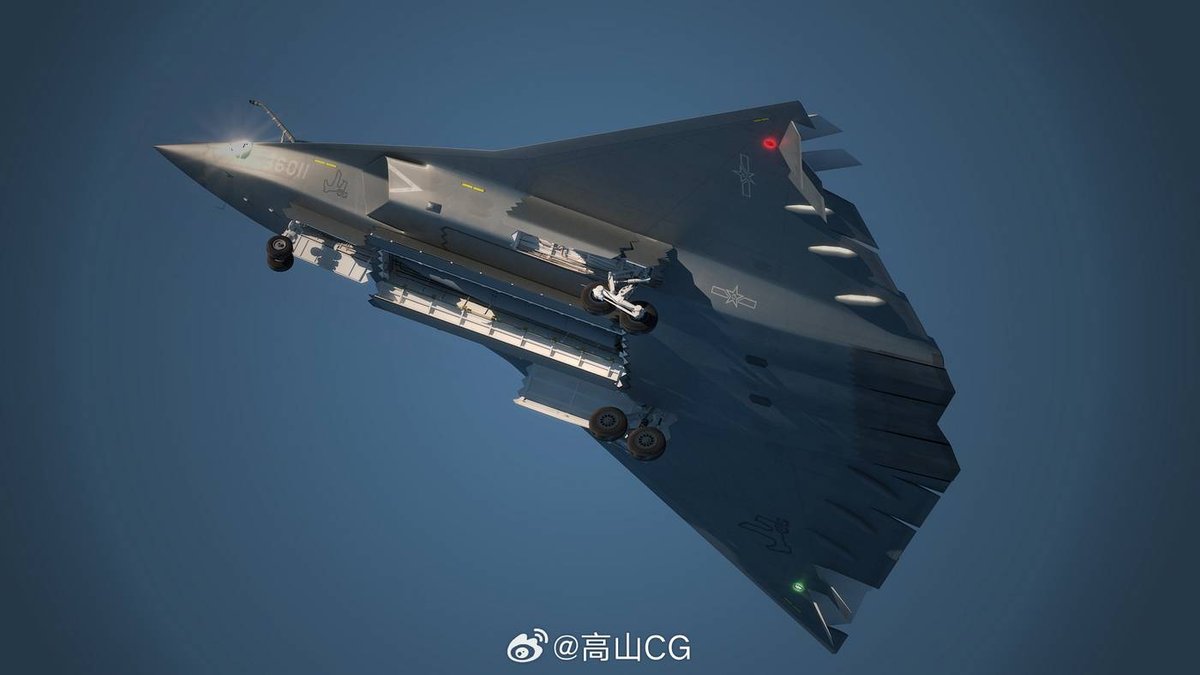
The world of military aviation is buzzing with a groundbreaking development: new images have surfaced, offering what appears to be the most detailed look yet at China's highly anticipated sixth-generation fighter jet. These photographs, widely discussed among defense analysts and enthusiasts, provide an unprecedented glimpse into the future of air superiority, showcasing an aircraft that promises to redefine aerial combat. While questions about their absolute authenticity persist, the consistency of the details with previous reports and videos suggests these images are indeed genuine, captured at the Chengdu Aircraft Corporation's primary facility.
This moment marks a significant milestone in China's ambitious efforts to lead in next-generation aerospace technology. As we dissect these fascinating new visuals, we'll explore what they reveal about the design, capabilities, and strategic implications of what some are calling the "J-36" or simply China's larger sixth-generation demonstrator. Get ready to dive deep into the fascinating world of future airpower.
The Unveiling: A Glimpse into Tomorrow's Airpower
The recent emergence of these leaked photographs has sent ripples through the defense community, offering a tantalizing look at China's advanced tactical jet. Captured from what appears to be some distance, likely using a long lens, the images nevertheless provide remarkable clarity, showing the prototype aircraft parked on the ground. This reveal follows earlier videos of the jet in flight, cementing the notion that China's sixth-generation program is rapidly advancing towards operational readiness. If you're curious about the fundamental characteristics that set these cutting-edge aircraft apart, take a moment to understand what makes a fighter truly next-gen by Defining 6th Gen Fighter Jets.
These photos strongly suggest that China is not merely catching up but actively shaping the future of aerial warfare. The visible elements point to a distinct design philosophy, hinting at an aircraft built for unparalleled performance and operational complexity. This isn't just an evolution; it's a leap.
Unpacking the Visuals: What the Photos Reveal About China's Next-Gen Jet
The new photographs offer a treasure trove of design details for analysts to scrutinize. Immediately notable is the aircraft's immense size, making it potentially the world’s largest fighter plane. This larger airframe suggests significant internal volume for advanced sensor suites, extensive fuel storage for ultra-long range missions, and particularly large internal weapons bays.
One of the most striking features confirmed by the images is the unique side-by-side seating arrangement within the cockpit, reminiscent of Russia’s Su-34 bomber. This twin-seater configuration, also showing green-tinted reflections from two separate heads-up displays (HUDs), speaks volumes about the expected complexity of the aircraft's operations. The sheer amount of information and operational demands that such a sixth-generation jet will handle likely exceeds the capacity of a single pilot, even with advanced automation and artificial intelligence. This setup also ensures that crews can share workloads more effectively over the aircraft's anticipated very long endurance missions, especially critical for the vast Pacific theatre. The photos also appear to show a distinctive canopy wing design, a unique aerodynamic feature, and three open ventral weapons bays on the underside: a larger central bay flanked by two smaller ones, hinting at versatile internal weapons carriage capabilities. To gain a deeper understanding of the official roadmap and conceptualization behind these designs, you might want to Explore Chinas 6th-gen fighter concepts.
A Closer Inspection: Authenticity and Anomalies
While the images are generating significant excitement, it’s also important to acknowledge some curious aspects that raise questions. The quality suggests the images might be a photograph of a photograph, or perhaps a screen capture from a monitor, leading to some visual distortion. Furthermore, there are interesting inconsistencies, such as apparent retouching or blurring around the dorsal air intake (engine intake on the top side) and shadowy sections near the main landing gear. These elements could indicate attempts to conceal certain objects or features.
Despite these visible edits and anomalies, the general consensus among experts is that the photographs are real and provide an authentic, albeit filtered, look at the prototype. The location, believed to be the Chengdu Aircraft Corporation’s primary facility, further reinforces their credibility. The confirmation of key rumored features, like the side-by-side cockpit, strengthens the belief in their legitimacy.
The Road Ahead: China's Ambitious 6th Generation Timeline
China's pursuit of a sixth-generation fighter has been a long-term strategic objective, with formal pre-research commencing as early as January 2019 by Chengdu Aircraft Corporation. By late 2021, scaled prototypes were already undergoing rigorous wind-tunnel and mock-up testing. The first publicly observed flight, captured in photographs and videos, occurred on December 26, 2024, showing the prototype in test sorties over Chengdu. Subsequent flights were also noted in March and April 2025. This rapid progression suggests an aggressive development timeline, with open-source assessments indicating potential deployment as early as 2030. If you're fascinated by what else might be in the pipeline, you can Explore future Chinese jets See Chinas to see other potential designs and concepts being considered.
This rapid development mirrors the impressive speed at which China brought its J-20 fifth-generation fighter from first flight to service entry – a timeline significantly shorter than those for American counterparts like the F-22 and F-35. This historical precedent sets high expectations for an equally swift deployment of the J-36, or its larger counterpart.
Powering the Future: Advanced Capabilities and Strategic Implications
The revealed design implies a wealth of advanced technologies underpinning this formidable aircraft. Beyond its impressive size and range, these sixth-generation fighters are expected to leverage unprecedented levels of automation and artificial intelligence, transforming how complex operations are executed. This includes everything from advanced sensor fusion and network-centric warfare capabilities to potentially controlling loyal wingman drones. The twin-seat configuration, in this context, highlights the anticipated cognitive load and the need for human oversight and decision-making in highly dynamic and data-rich combat environments, despite growing AI integration.
The aircraft's extraordinary range is particularly critical for operations across the vast expanse of the Pacific theatre. This capability will enable it to conduct air defense duties and launch strike operations far beyond the "First Island Chain," significantly complicating any efforts by the U.S.-led Western alliances to project power into the region. To truly grasp the innovative leaps being made, it's worth exploring the foundational advancements that make these aircraft possible; consider diving into Advanced Technologies Powering Chinas Future.
The Global Race: How China Stacks Up Against International Efforts
China's progress with its sixth-generation fighter program, particularly with visible flight prototypes, places it at the forefront of the global race for next-generation air superiority. While the American F-47 sixth-generation fighter is also under development and speculated to be similarly large, Chinese programs are currently the only ones with publicly observed flight prototypes. The images reveal that China is not only developing one but potentially two classes of sixth-generation fighters in parallel: this larger, ultra-long-range jet, and a lighter counterpart.
The People's Liberation Army Air Force is likely to begin fielding both aircraft in the early 2030s. This rapid advancement stands in stark contrast to the challenges faced by other nations. The commitment by Boeing, the F-47's primary contractor, to its highest level of internal investment to develop the aircraft underscores the intensity of this competition. As China appears set to field multiple next-generation platforms, the timeline for the United States to bring even a single such aircraft into service remains a serious question. For a broader perspective on how China's advancements compare to those of other global powers, it’s insightful to Compare China vs. Global 6th Gen programs and strategies.
The emergence of these photographs signals more than just a new aircraft; it marks a pivotal moment in the ongoing evolution of global military power. As China pushes the boundaries of aerospace engineering, the implications for future air combat and strategic balances worldwide are profound and demand our closest attention.