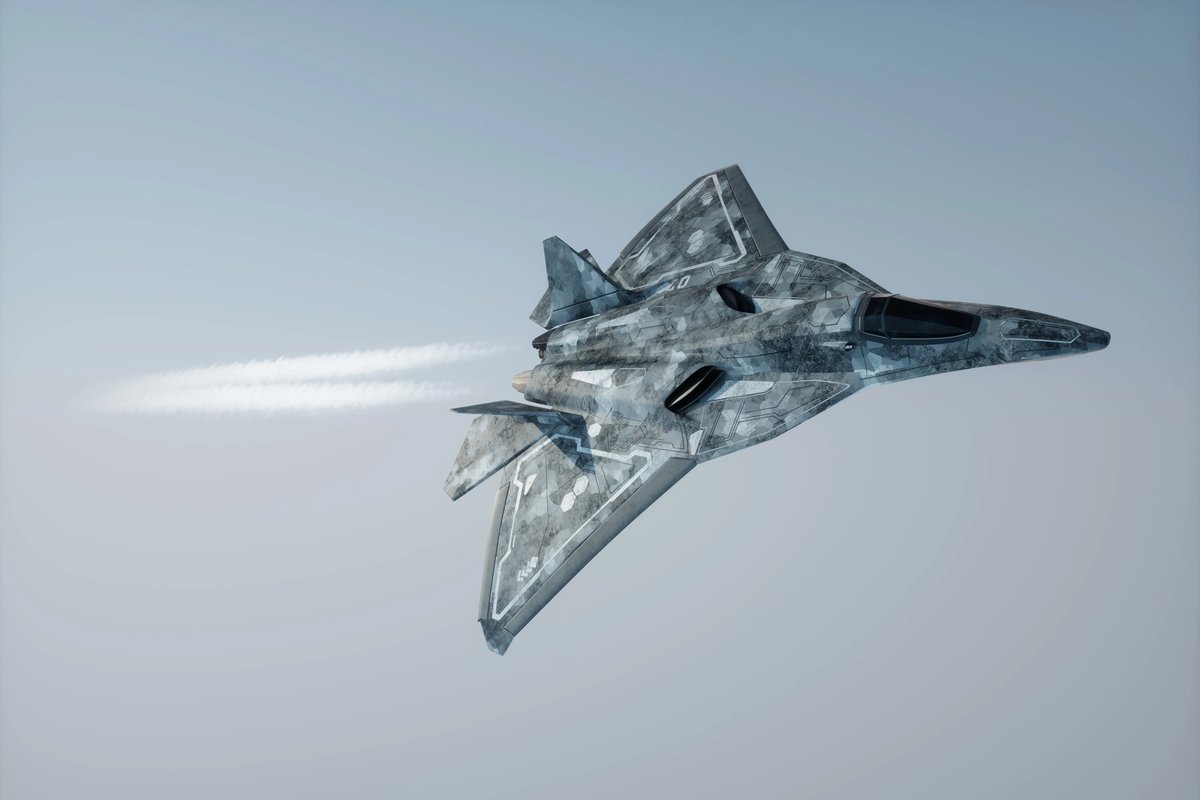
Forget everything you thought you knew about air combat. While the world is still grappling with the advanced capabilities of fifth-generation fighters like the American F-35 and China's own J-20, a new, even more revolutionary class of aircraft is already on the horizon. We're talking about China's Official 6th Gen Fighter Concepts & Programs, an ambitious push that threatens to fundamentally redefine air superiority and challenge the global balance of power. This isn't just about faster jets or better stealth; it's about a paradigm shift towards autonomous, networked, and AI-driven aerial warfare.
At a Glance: What You Need to Know About China's 6th Gen Fighters
- Beyond 5th Gen: Sixth-generation fighters integrate autonomy, network-centric warfare, drone swarms, and advanced AI far beyond current capabilities.
- China's Contenders: Purported programs include the J-36 (a tailless, supersonic, offensive fighter for deep strikes) and the J-50 (a lightweight fighter).
- J-36's Debut: Rumored public debut for the J-36 occurred on December 26, 2024, with an official reveal anticipated at Zhuhai Airshow 2026.
- Game-Changing Features: Expect trijet propulsion, plasma-based stealth, directed energy weapons, and C2 node functionality.
- Challenging U.S. Dominance: The J-36, with its speed, autonomy, and multi-role design, poses a direct threat to the F-35 fleet and necessitates an accelerated U.S. response.
- Global Race: The U.S. (NGAD), Europe (FCAS), and Japan (F-3) are also heavily invested in their own 6th-gen programs.
- Key Hurdles for China: Engine development, AI integration, counter-stealth technologies, and mass production remain significant challenges.
The Dawn of a New Era: What Defines a 6th Generation Fighter?
Before we dive into China's specific ambitions, let's understand what makes a sixth-generation fighter a truly revolutionary leap, not just an incremental upgrade. If fifth-generation aircraft like the F-35 or J-20 excelled at stealth and sensor fusion, their successors are poised to master autonomy, interconnectedness, and the command of robotic swarms.
Imagine an aircraft that can:
- Operate Autonomously: Handle complex mission segments, from take-off to combat maneuvers, with minimal human input. The pilot becomes more of a mission commander than a stick-and-rudder operator, able to delegate tasks to the AI with confidence.
- Command Drone Swarms: Act as a mothership, deploying and managing a flock of unmanned aerial vehicles (UAVs) for reconnaissance, electronic warfare, missile interception, or even direct combat. This distributed lethality vastly expands the fighter's reach and tactical options.
- Integrate Network-Centric Warfare: Seamlessly tap into real-time data from every sensor, aircraft, satellite, and ground unit across the battlespace. This creates an unparalleled understanding of the operational environment, turning raw data into actionable intelligence at machine speed.
- Push Stealth & Speed Limits: Achieve even greater stealth profiles, potentially through exotic materials or active cloaking, while pushing speeds potentially beyond Mach 5 (hypersonic flight). Speed isn't just about getting there faster; it's about survivability and striking first.
- Harness Artificial Intelligence: AI isn't just assisting; it's making advanced, real-time tactical decisions, managing sensor inputs, identifying threats, and optimizing flight paths, dramatically reducing pilot workload and enhancing combat effectiveness.
These features collectively represent a significant departure from the capabilities of previous generations, promising a future battlefield where information superiority and distributed, autonomous operations are paramount.
China's Ambitious Vision: The J-36 and J-50 Emerge
Against this backdrop, China's aerospace industry, particularly the Chengdu Aircraft Industry Group (CAIG), has reportedly embarked on its own ambitious journey, unveiling concepts for what are touted as their sixth-generation fighters: the J-36 and the J-50. These programs signal a clear intent to not just match, but potentially surpass, current global airpower capabilities. If you're looking for a glimpse of the future, Chinese 6th-gen jet photos offer a fascinating, albeit often speculative, insight into these advanced designs.
The J-36: A Deep-Strike Offensive Powerhouse
The J-36, in particular, stands out as China's primary bid for future air dominance. It's a design rumored to have made its public debut on December 26, 2024, with an official, more comprehensive reveal widely anticipated at the Zhuhai Airshow in 2026.
Here’s what we understand about this formidable platform:
- Tailless Design: Its rumored tailless configuration is a radical departure, suggesting an extreme focus on stealth and potentially super-maneuverability. Removing the vertical stabilizers, a common radar reflection point, significantly reduces the radar cross-section (RCS) from various angles.
- Supersonic and Stealthy: Expected to be exceptionally stealthy, the J-36 will also be a supersonic offensive fighter, designed for deep penetration strikes far behind enemy lines. This combination allows it to bypass existing air defenses with unprecedented ease.
- Offensive Punch: The J-36 is anticipated to feature advanced internal weapon bays capable of carrying long-range air-to-air missiles like the PL-15 and the even more advanced PL-21, alongside precision glide bombs. This internal carriage maintains its stealth profile during critical mission phases.
- Trijet Propulsion (Speculated): Reports suggest a potential trijet propulsion system, offering redundant power, enhanced thrust for supercruise or even hypersonic dashes, and potentially greater fuel efficiency at different flight regimes.
- Plasma-Based Stealth: This is a truly cutting-edge, if still largely theoretical, technology. Plasma stealth involves creating a cloud of ionized gas around the aircraft, which can absorb or refract radar waves, making the aircraft virtually invisible. If successfully implemented, this would represent a quantum leap in stealth technology.
- Directed Energy Weapons: The integration of directed energy weapons (DEW) – likely high-energy lasers – could provide entirely new defensive and offensive capabilities, from missile defense to precision strikes against ground targets or other aircraft.
- Command and Control Node: Far more than just a fighter, the J-36 is expected to function as a command and control (C2) node. With advanced radar and AI-supported targeting systems, it could coordinate drone swarms, other manned aircraft, and even ground forces, acting as a pivotal hub in a networked battlefield.
The J-50: Lightweight Prowess
While less detail is available on the J-50, it appears to share foundational design concepts with the J-36, but with a different mission profile. The J-50 is intended as a lightweight fighter, focusing on agility and potentially high sortie rates. Its goal could be to exceed or parallel the American F-35 in terms of range, payload capacity, and supersonic flight performance, offering a more versatile and perhaps cost-effective component to China's future air fleet. Think of it as a complementary piece, handling a wider array of missions while the J-36 focuses on specialized, high-stakes deep strikes.
Reshaping the Skies: The Impact on Air Superiority
The emergence of Chinese sixth-generation fighters, particularly the J-36, is not merely an incremental improvement; it's a strategic game-changer. For decades, the United States has maintained an undeniable edge in air superiority, with its F-22 and F-35 fleets representing the pinnacle of air combat technology. However, the J-36 and its associated capabilities could fundamentally challenge this dominance.
Consider the implications:
- Threat to Current U.S. Fleets: The J-36's rumored speed, autonomy, advanced stealth (especially plasma-based), and multi-role capabilities could pose an existential risk to the U.S. F-35 fleet, which currently forms the backbone of the U.S. Air Force and Navy. In a future conflict, an aircraft like the J-36 could potentially outmaneuver, out-stealth, and out-fight even the most advanced fifth-generation platforms.
- Shifting Global Demand: The potential for a capable Chinese 6th-gen fighter could negatively impact future demand for the F-35, particularly from international partners who might seek comparable or superior indigenous alternatives.
- Accelerated U.S. Development: This shift directly necessitates the U.S. to accelerate its own Next Generation Air Dominance (NGAD) program. The race to develop and deploy these advanced aircraft is no longer theoretical; it's a pressing strategic imperative.
This isn't just about winning dogfights; it's about controlling information, projecting power, and deterring aggression in an increasingly complex global landscape. The side that masters the sixth generation first will hold a profound strategic advantage.
The Global Race: Who Else is in the 6th-Gen Fray?
China isn't alone in recognizing the imperative of next-generation airpower. Major global players are also pouring resources into their own ambitious programs, creating a fiercely competitive landscape that will define military aviation for decades to come.
- United States (NGAD): The U.S. Next Generation Air Dominance (NGAD) program is perhaps the most well-known Western effort. Focusing heavily on autonomy, enhanced stealth, advanced sensors, and drone swarm control, NGAD aims to produce a family of systems – both manned and unmanned – that will ensure air superiority well into the 21st century. The U.S. anticipates initial operational capability potentially by the early 2030s.
- Europe (FCAS/Tempest): European nations are pursuing two distinct but related initiatives. The Future Combat Air System (FCAS) is a collaborative project primarily involving France, Germany, and Spain. Across the Channel, the United Kingdom is leading its own ambitious Tempest program, with involvement from Italy, Sweden, and Japan. Both aim to deliver manned fighters working in conjunction with unmanned "loyal wingmen" and deeply integrated into a broader combat cloud.
- Japan (F-3 Fighter Program): Japan, a nation acutely aware of regional threats, is developing its own F-3 fighter program under Mitsubishi. This project also emphasizes stealth, advanced sensors, and the capability to integrate with and command unmanned systems, aiming to replace its aging F-2 fleet.
The introduction of these highly advanced aircraft will redefine aerial combat strategies, compel nations to adopt new military doctrines, and demand significant investments in defense infrastructure and cyber warfare capabilities. The stakes couldn't be higher.
Navigating the Hurdles: Challenges for China's 6th Gen Ambitions
While China's ambition is clear and its progress impressive, the path to a fully operational and dominant sixth-generation fleet is fraught with significant challenges. These aren't minor technical issues but fundamental hurdles that could impact the scale and timeline of its programs.
- Jet Engine Development: This has historically been a significant Achilles' heel for Chinese aerospace. Matching the performance of Western high-performance engines, such as the U.S.-made Pratt & Whitney F119 (used in the F-22) or General Electric's XA100 (developed for NGAD), is crucial. Achieving capabilities like true supercruise (sustained supersonic flight without afterburner) and potentially hypersonic flight, while maintaining efficiency and reliability, demands immense technological sophistication. China's ability to produce these engines domestically without relying on foreign technology remains a critical bottleneck.
- AI Integration for Autonomous Combat: While China has made strides in AI, integrating it for complex, real-time autonomous combat scenarios at the level required for a 6th-gen fighter is a different beast. This isn't just about advanced algorithms; it's about robust, trustworthy, and adaptable AI that can make life-or-death decisions in a highly dynamic environment, often beyond human reaction times. Bridging the gap with U.S. and NATO capabilities in this domain will require immense investment and innovation.
- Counter-Stealth Technologies: As stealth technology advances, so too do the methods to detect it. The potential for modern counter-stealth technologies – including low-frequency radar, quantum radar, and advanced infrared tracking systems – to neutralize its stealth advantage is a constant threat. Investing in plasma stealth may be a response to this, but it adds another layer of complexity and developmental risk. A fighter that relies heavily on stealth for survivability could be severely compromised if that advantage is negated.
- Production and Deployment Hurdles: Moving from a successful prototype or concept demonstrator to mass production of a highly complex, advanced aircraft is an enormous undertaking. It requires sophisticated manufacturing processes, a robust supply chain, skilled labor, and significant financial commitment. China's history with advanced aircraft production has shown that scaling up can be a major hurdle.
- Intense Global Competition: China isn't operating in a vacuum. Programs like NGAD, FCAS, and Tempest represent multi-billion dollar efforts backed by some of the world's most advanced aerospace industries. This intense competition means China's programs must not only be successful but must continuously innovate to stay ahead or even keep pace. The technological lead gained by any one nation could be temporary, forcing a perpetual cycle of research and development.
What This Means for Future Air Warfare and Geopolitics
The pursuit of sixth-generation fighters like China's J-36 and J-50 isn't just about military hardware; it’s a profound strategic shift. When these aircraft eventually take to the skies, their impact will ripple across military doctrines, geopolitical alignments, and technological races for decades.
You'll see:
- Redefined Aerial Combat: Dogfights as we know them might become obsolete, replaced by networked engagements involving manned-unmanned teaming, AI-driven decision-making, and precision strikes from unprecedented ranges. The pilot's role will evolve from active control to strategic oversight and ethical decision-making.
- Shifting Balance of Power: The ability to field such advanced platforms will significantly alter the strategic landscape, granting the possessor a significant deterrent and power-projection capability. Nations without comparable technology will face immense pressure to either develop their own or seek alliances for protection.
- New Military Doctrines: Existing airpower doctrines will become outdated. Militaries will need to rethink training, logistics, maintenance, and command structures to fully exploit the capabilities of AI-driven, networked platforms. This includes developing robust counter-measures and strategies to defend against these new threats.
- Influence on Defense Infrastructure: Significant investment in advanced sensor networks, satellite communications, and cyber defenses will be essential to support these aircraft. The "combat cloud" concept requires an underlying infrastructure that is resilient, secure, and incredibly fast.
- Escalation in Cyber Warfare: With greater reliance on networked systems and AI, the vulnerability to cyber attacks will also increase. Disrupting an opponent's combat cloud or corrupting their AI decision-making could become as decisive as a kinetic strike.
Looking Ahead: The Road to 2030 and Beyond
China's push into sixth-generation fighter development marks a pivotal moment in military aviation. The rumored J-36 and J-50 represent not just new aircraft, but a new philosophy of air warfare—one that embraces autonomy, network intelligence, and distributed combat power.
While significant challenges remain, particularly in advanced engine development and AI integration, the sheer scale of China's investment and its rapid technological progress cannot be underestimated. The anticipated official reveal of the J-36 at Zhuhai Airshow 2026 will undoubtedly be a closely watched event, offering the world its first clear look at what China envisions as the future of air superiority.
For you, as an observer of global power dynamics, understanding these programs isn't just about technical specifications; it's about anticipating the future shape of geopolitical competition and the relentless pace of military innovation. The race for the 6th generation is truly on, and its outcome will shape the security landscape for generations to come.